

.webp "Duct relative humidity sensor")
.webp "Duct relative humidity meter")
.webp "Duct relative humidity transmitter")
.webp "Duct relative humidity detector")
.webp "Duct relative humidity HVAC sensor")
.webp "Duct relative humidity HVAC transmitter")

EU declaration conformity

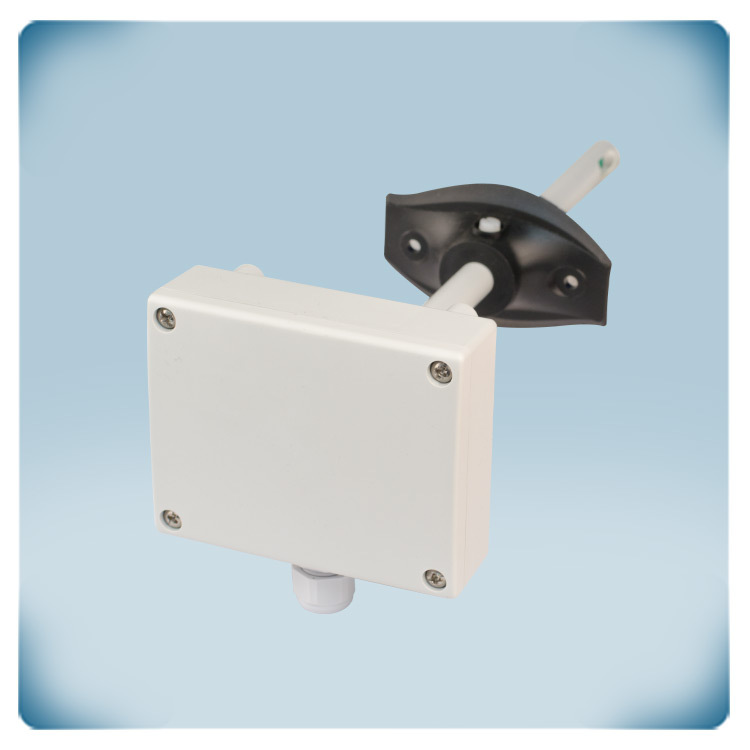

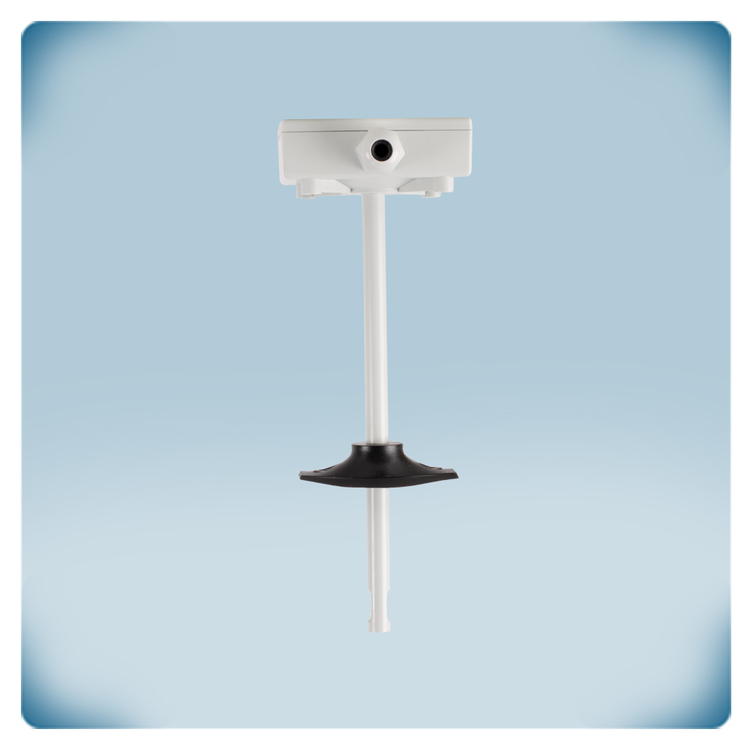
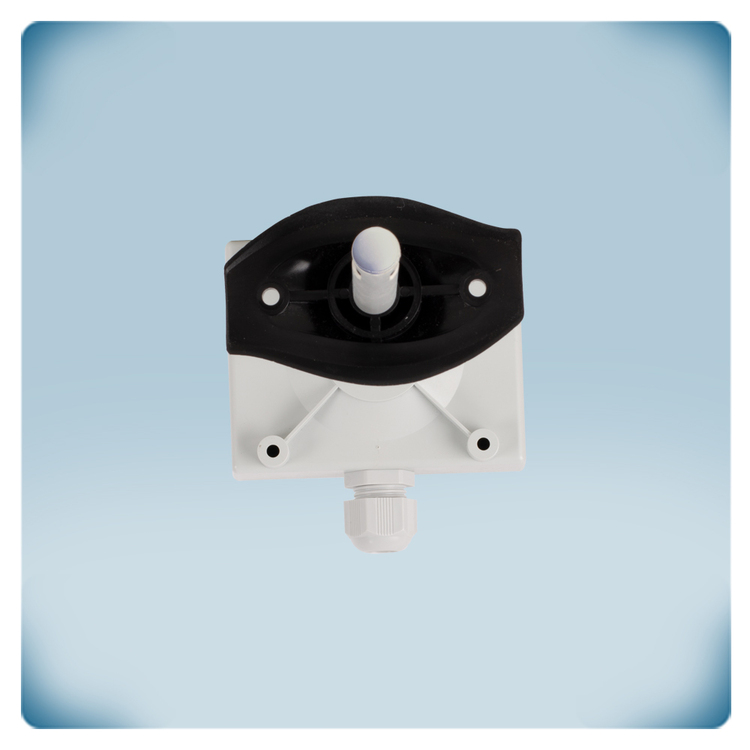

Temperature and Humidity Sensor | Duct | PoM
Product description
DSTHM-2 is a sensor for measuring temperature and relative humidity in air ducts. The dew point is calculated based on both readings.
The sensor has no analogue outputs. Modbus RTU communication and a 24 VDC power supply are connected by Power over Modbus (PoM) via one RJ45 connector. All measured values and settings are accessible via Modbus RTU communication.
The enclosure is made of premium plastic and provides an IP54 protection. The duct sensor probe has an IP20 protection rating.


Additional specifications and description
Which parameters are measured and why is it important?
This sensor measures temperature and relative humidity in air ducts. The dew point is calculated based on these measurements.
Temperature and relative humidity (RH) play a major role in human comfort and the sense of well-being. These parameters are continuously influencing each other. Monitoring and balancing both temperature and relative humidity (and/or dew point) is therefore essential for maintaining stable indoor conditions, preventing condensation, and improving overall comfort and health. Most Sentera sensors measure temperature and relative humidity for complete climate control.
What are the configuration and customisation options?
This sensor requires little configuration and can be used almost immediately once it has been installed. Temperature and relative humidity can vary depending on the region and season, these parameters are set to the correct values during installation. The other default settings are typically suitable for most applications, however, they can also be adjusted, if necessary.
This sensor has no analogue outputs, which makes it simpler and more cost efficient.
Modbus RTU communication is used to transmit the measured values and can be used to change all of the settings. The Modbus register map provides a complete overview of all adjustable settings.
How is the sensor installed, and what are the power and connectivity requirements?
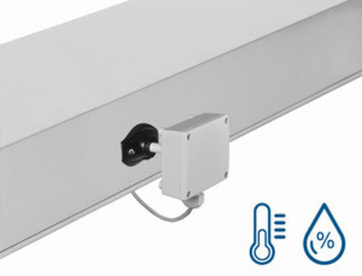
The sensor is designed for installation in rectangular or circular air ducts. The black mounting flange simplifies installation onto circular ducts. For optimal performance, place the sensor in a straight section of the duct. Avoid installing near filters, fans, cooling coils, or other sources of turbulent airflow. Make sure the sensor is positioned correctly according to the airflow direction. For more information, please refer to the mounting instructions.
This sensor can be connected with just one RJ45 connector. Power over Modbus (PoM) connects Modbus RTU communication and a 24 VDC power supply via one single UTP-cable. A 24 VDC supply voltage increases the safety and reliability of your installation, by offering protection against short circuit, overload and overvoltage.
What are the manufacturing quality and protection ratings?
All sensors are designed and manufactured in Europe. Each device is calibrated and tested in our factory. Only high-quality components are used, ensuring long-term stability and accuracy.
The enclosure is produced in-house by Sentera Plastics from premium ASA, providing exceptional strength and durability. The enclosure offers an IP54 protection against ingress of dust and moisture. The sensor element is housed within the duct sensor probe, which has an IP20 protection rating. The probe includes an opening that allows airflow to come into direct contact with the sensor element.
Learn more about optimising your indoor comfort and living conditions:




Remarks, reviews & ratings